Human-centred design recommendations to help The National Archives shape the future of the data economy.
Introduction
Re-using public sector information is a government priority, one the UK Industrial Strategy estimates could unlock billions in economic growth. Yet publishing data openly, and enabling its re-use, is a process full of friction for public institutions. As the authority on licensing, The National Archives and their digital and policy teams partnered with IF to understand why the licensing framework is challenging to use today, prototype a redesign, and recommend how The National Archives can take a leadership role in closing the gaps so that people can use it with confidence.
Problem
This story starts with ‘Letters Patent’ from the King. A formal document granting the management of Crown copyright and database right material, and how it is made available, to the 'King’s Printer of Acts of Parliament’ - an office dating from 1889 and carried out by The National Archives. If that sounds antiquated, it is. But this system underpins something very modern: the Open Government Licence.
The Open Government Licence shares the same simple ambition as the influential Creative Commons Attribution Licence: anyone can re-use public sector information in almost any way they choose, as long as they attribute it. From the public servant trying to work out how to publish a dataset that might help another local authority, to the small business building a product on top of government data, to the licensing consultant brought in to rescue an organisation when their data practices have gone wrong. For all of them, the licence is meant to make things simpler.
Think of developers using British Geological Survey data to select sites, or a genealogy site using local authority records of births and deaths. The licence that makes both of those possible is meant to be friction-free. In practice, it rarely is.
For most people who encounter it, the Open Government Licence raises more questions than it answers. A public servant trying to publish data worries if they're doing it right. An organisation trying to build on that data isn't sure they're protected. The friction exists on both sides, and for the developers and genealogists of the world, that uncertainty has real commercial stakes.
Meanwhile, as AI agents begin finding and using data on people’s behalf autonomously, the framework needs to be fit for new kinds of users entirely.
So we set out to understand who's using the framework, what’s making it challenging, and how to improve awareness, understanding and use of it.

Our approach
People who use the UK Government Licensing Framework (GLF) and people who visit The National Archives for guidance on it are not the same. To learn from both, we took a blended research approach, intercepting people who naturally found their way to the GLF pages, and reaching out to our wider network to understand how different people encounter licensing at different moments in their work.
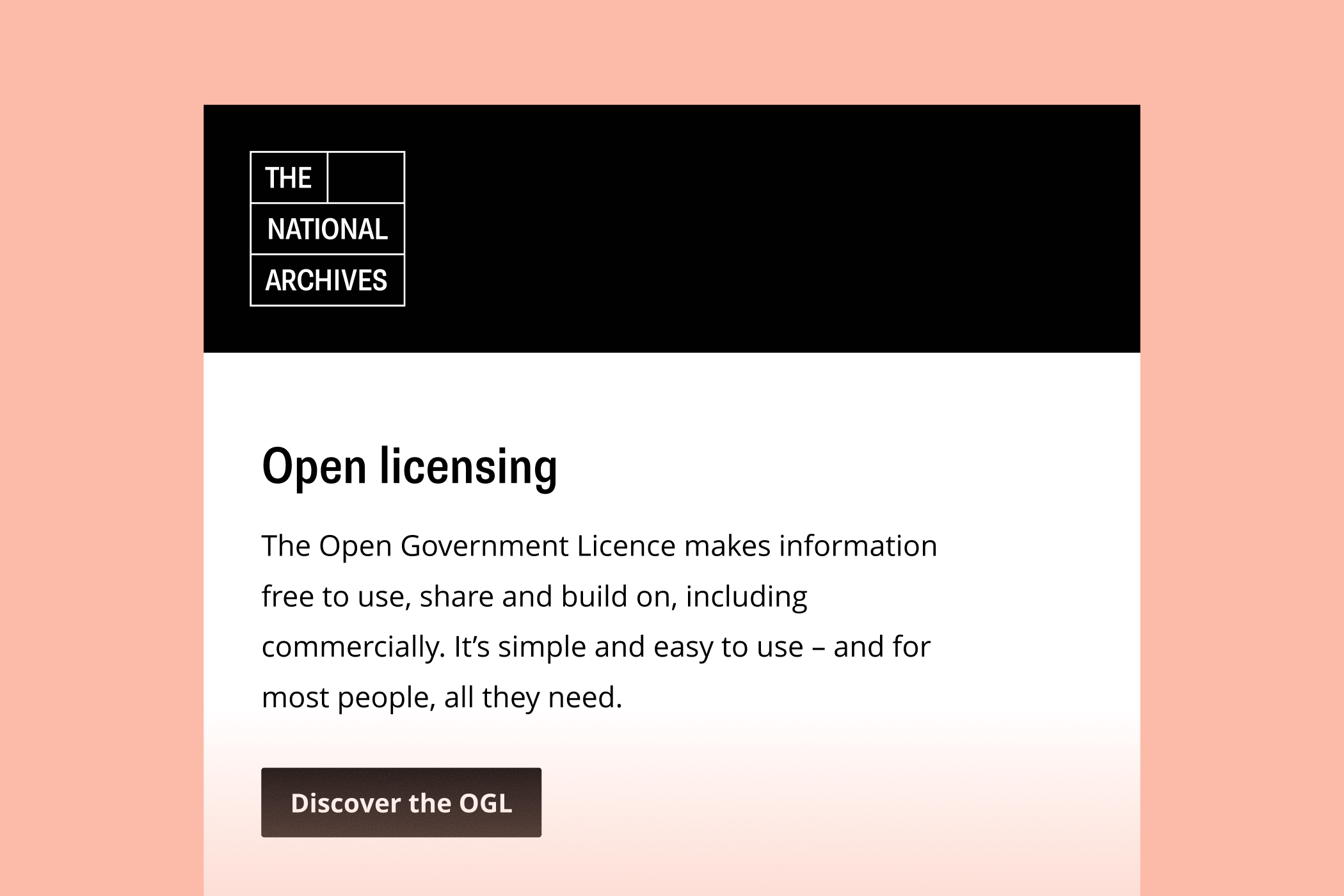
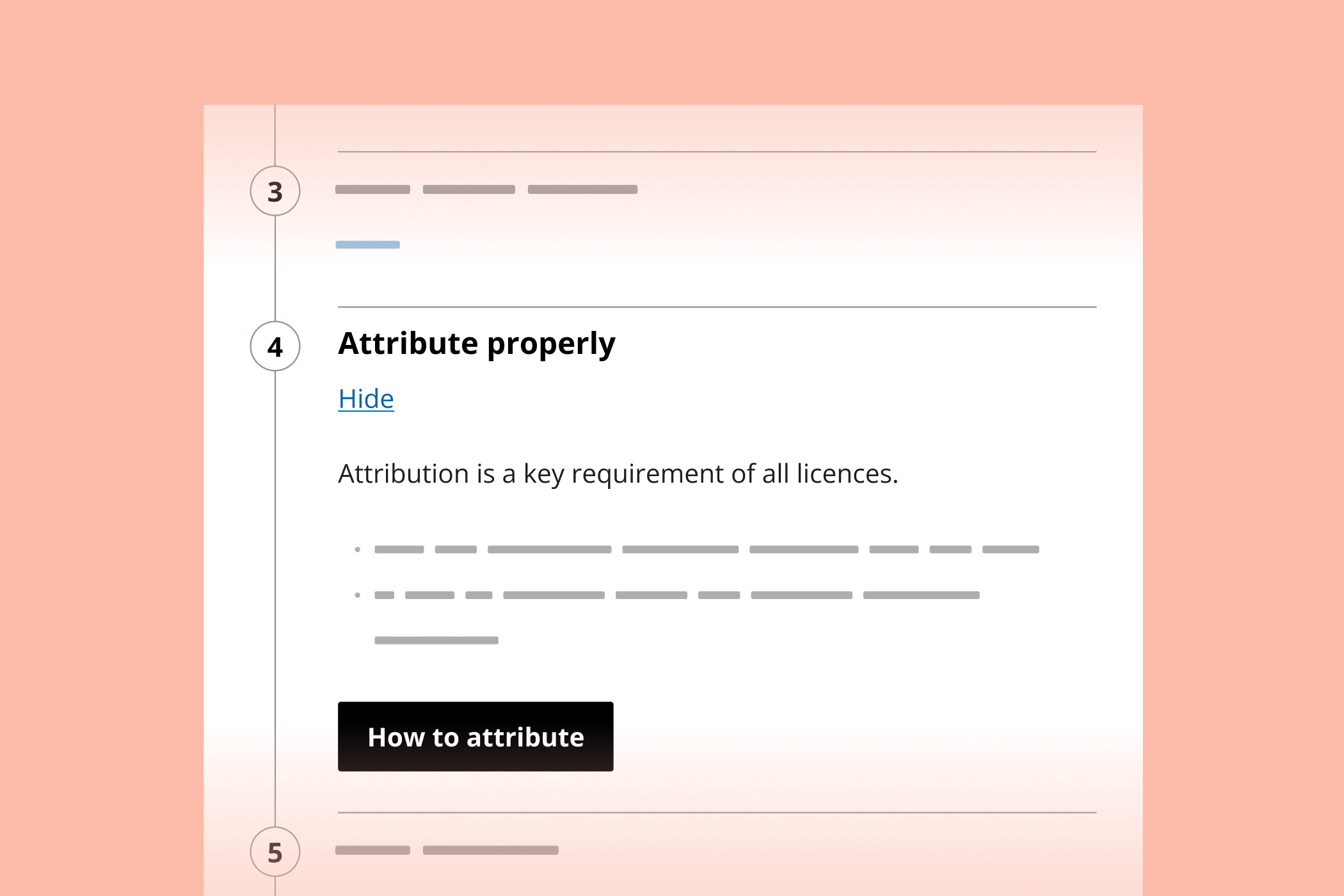
We quickly built prototypes to use as conversation starters, exploring how better content design and information architecture could help people navigate the framework more intuitively, find relevant guidance faster, and apply licences to their own context without needing expert support.
What we heard was full of contradictions, which turned out to be the point. The National Archives has to serve experts looking for highly specific legal use cases, and complete licensing novices, often with the same page. Not designing for these differences has a real cost: people fear getting it wrong, they don't always trust the licence will protect them, and they find the framework ambiguous precisely when they need it to be definitive. To design inclusively across that range, we developed a set of archetypes and jobs to be done, giving the digital team redesigning the site something to anchor in: real user needs, rather than the policy logic that currently shapes the experience.
AI and agentic systems are clearly changing the web and the handling of intellectual property on it; as we think about how the framework needs to evolve to meet these challenges and opportunities, IF’s work has given us a foundational understanding of what our stakeholders need.
[.quote-author]Chris Day, Policy Delivery Lead[.quote-author]
From there, we worked with policy and digital stakeholders to develop strategic and practical recommendations grounded in the ambition that public sector information should fuel real economic growth.
At a strategic level, we painted a vision for the leadership role The National Archives could play in asserting authority, actively guiding people, and earning trust across the data-sharing landscape.
At a practical level, we created actionable design recommendations for how to help someone understand the value of the framework, apply it confidently to their situation, and make sense of legal language that was never written with them in mind.
Outcomes
The impact of this work is both immediate and far-reaching.
For The National Archives' digital team, the research provides a direct foundation for their ongoing redesign work. Rather than a site shaped by policy logic, they now have a shared, human-centred understanding of user needs to build from. One that sets a clear direction of travel towards TNA playing a more active role: not just offering information, but guiding people through licensing and communicating its value.
This work has been prompted, in part, by the Industrial Strategy’s ambition to maximise the economic potential of data across the economy. TNA worked with DSIT on this, who part-funded IF’s research. The discovery work means we can speak to the needs of data owners and re-users, and bring insight to continuing work to better manage the government's data assets and realise their value.
[.quote-author]Chris Day, Policy Delivery Lead[.quote-author]
Beyond the digital team, the work has become a catalyst for closer collaboration between TNA and other government departments. By surfacing the gap between the framework's potential and its current reach, it has informed TNA’s work as a partner in delivering the Industrial Strategy's ambition and opened a broader conversation about the role it can play in the national data agenda.
And looking further ahead, the project has given TNA something more significant: a forward-looking stewardship role for the GLF. One that keeps pace with how data is being created, shared and consumed in an increasingly agentic world, and that people and AI agents alike can trust to get it right.
Heading 1
Heading 2
Heading 3
Heading 4
Heading 5
Heading 6
Lorem ipsum dolor sit amet, consectetur adipiscing elit, sed do eiusmod tempor incididunt ut labore et dolore magna aliqua. Ut enim ad minim veniam, quis nostrud exercitation ullamco laboris nisi ut aliquip ex ea commodo consequat.
Duis aute irure dolor in reprehenderit in voluptate velit esse cillum dolore eu fugiat nulla pariatur.
Block quote
Ordered list
- Item 1
- Item 2
- Item 3
Unordered list
- Item A
- Item B
- Item C
Bold text
Emphasis
Superscript
Subscript

